Building the Connected Hospitality Ecosystem: The Evolving Role of the PMS
When systems evolve, connectivity becomes critical
As hospitality technology stacks expand, hotels are managing more systems, more data, and more complexity than ever before. Yet many of these systems still operate in isolation – creating fragmented workflows and limiting operational efficiency.
For Lisa Jane Wheaton, Senior Product Strategist of Maestro PMS, this shift is redefining the role of the PMS – from a system of record to a system that enables connection across the ecosystem.
The challenge: complexity at scale
Hotel groups today are navigating increasing operational pressure – from labor shortages and rising costs to the need to deliver consistent, personalized guest experiences.
“Operational efficiency is one of the biggest challenges hotel groups face today,” Wheaton explains. “Technology can play a critical role by automating routine workflows, improving staff productivity, and providing real-time visibility across the portfolio.”
At the same time, expectations around guest experience continue to rise, requiring systems to work together more seamlessly than ever before.
The collaboration: building with shared vision
Maestro’s partnership with Sirma began with a clear goal: to support modern integration and long-term product evolution.
“We were looking for a partner who shared our vision for operational excellence, modern integration standards, and forward-thinking product evolution,” Wheaton says.
Since then, the collaboration has focused on expanding integration capabilities through initiatives such as ARI Shop and the evolution of the Genomi+ API – delivered through what she describes as “shared vision, disciplined execution, and strong communication.”
What sets the partnership apart, however, is not just delivery, but understanding.
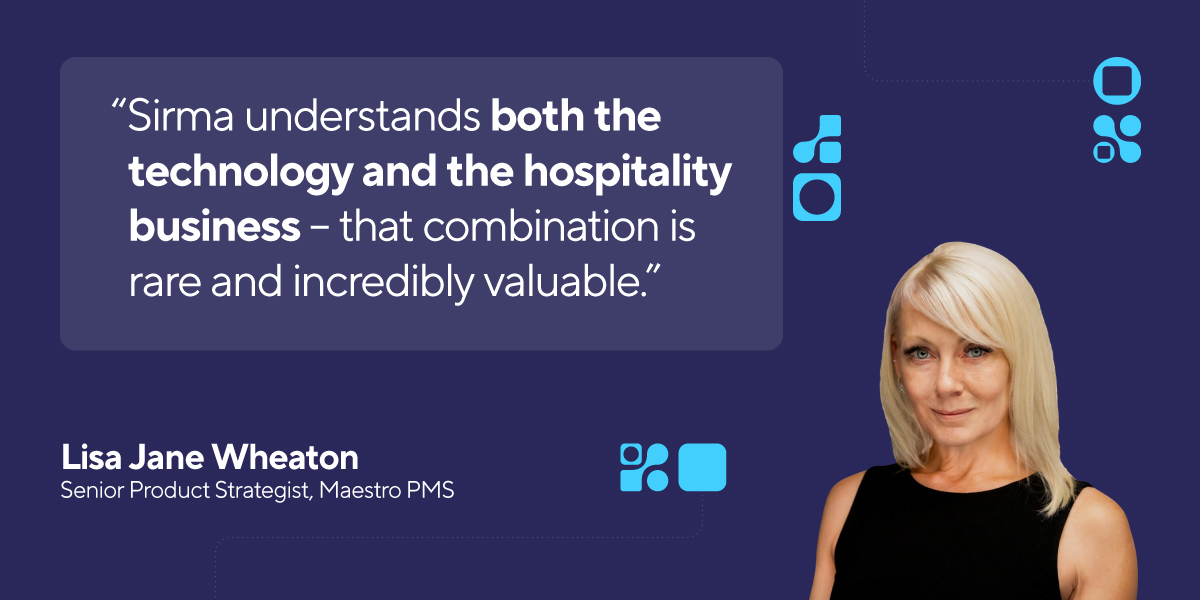
“Sirma understands both the technology and the hospitality business – that combination is rare and incredibly valuable. They approach engineering with rigor, but also with clear awareness of hotel operations.”
This alignment allows both teams to move faster, reduce complexity, and stay focused on outcomes that matter to clients.
The impact: from integration to value
The results of the collaboration are felt not just at a technical level, but across day-to-day hotel operations. Integrations become faster. Systems work more reliably. And teams spend less time managing complexity.
“Our collaboration allows Maestro to deliver more than technical connectivity – it enables us to unlock meaningful value for clients faster and with far less operational friction,” says Wheaton. That impact extends to how hotels build and evolve their technology environments.
“Hotels are no longer forced into rigid ecosystems; instead, they can combine best-in-class technologies with confidence that Maestro will support and optimize the broader tech stack.” In an increasingly complex landscape, that flexibility becomes a competitive advantage.
Looking ahead: AI with focus, not friction
As AI adoption accelerates, the conversation is shifting from hype to practical application. “The most effective starting point is automating routine, repetitive tasks that consume staff time but add little strategic value,” Wheaton explains.
These early use cases create immediate value, and build confidence.
“Once hotels see tangible benefits and gain confidence, they can explore more advanced applications such as predictive analytics, personalization, and revenue optimization.” But the real opportunity lies in speed.
“The biggest opportunity lies in real-time, data-driven decisions – AI can dramatically shorten the time between seeing the data and making a decision.”
And none of this happens in isolation.
“Integration-driven innovation will be a significant force shaping hospitality over the next few years,” Wheaton adds. “The ability to move data cleanly, securely, and in real time across platforms is becoming essential.”
As systems become more interconnected, one factor stands out: “In an interconnected ecosystem, the strength of the partnerships behind the technology becomes just as important as the technology itself.”
About Connected Conversations
Connected Conversations is a Sirma interview series spotlighting leaders who are redefining Travel & Hospitality through data, intelligence, and meaningful collaboration. Because in the end, it’s not about systems talking to each other. It’s about people connecting ideas – and turning complexity into clarity.