HITEC has always been one of the best indicators of where hospitality technology is heading, and this year’s event in San Antonio certainly didn’t disappoint. The exhibition floor was busy throughout, conversations were constant, and there was a real sense that the industry is entering its next phase of technology adoption. What became clear very quickly, however, was that the conversation around AI has changed.
When Everyone Has AI, Experience Becomes the Differentiator
A year ago, having an AI story helped companies stand out. At HITEC 2026, nearly everyone had one.
That changes the conversation.
Walking the exhibition floor, it was impossible to ignore the number of AI announcements, copilots, agents and automation platforms on display. But once the demonstrations ended, discussions quickly shifted from features to fundamentals.
Hospitality leaders were far less interested in what AI could do in theory and much more focused on how it could be applied within the reality of their own organizations. Questions centered around integration, governance, security, implementation, return on investment and, ultimately, who had the expertise to deliver meaningful outcomes.
This shift was reflected in the conversations we had throughout the four-day event. While guest-facing AI continues to attract attention, there was noticeably greater interest in operational AI. Hotel groups are increasingly looking at how AI can improve efficiency behind the scenes – from maintenance and housekeeping to revenue management, finance, procurement and day-to-day decision-making. The focus is moving away from novelty and toward solving real operational challenges.
Perhaps the biggest takeaway wasn’t that AI has arrived. It was that the industry is becoming much better at distinguishing between AI as a capability and AI as a marketing message.
Integration Has Become Hospitality’s Biggest AI Challenge
For many hospitality organizations that distinction comes down to one thing: integration.
Hotels already operate highly complex technology ecosystems comprising PMS, CRS, POS, CRM, revenue management platforms and countless other specialized applications. AI is only as valuable as the information it can access, making interoperability and connected data one of the industry’s biggest priorities.
Rather than looking for another standalone application, many organizations are seeking technology partners capable of connecting these fragmented systems while delivering solutions tailored to their operational needs. As AI adoption accelerates, the ability to integrate, orchestrate and scale technology across the enterprise is becoming just as important as the AI itself.
The Conversations That Validated Our Approach
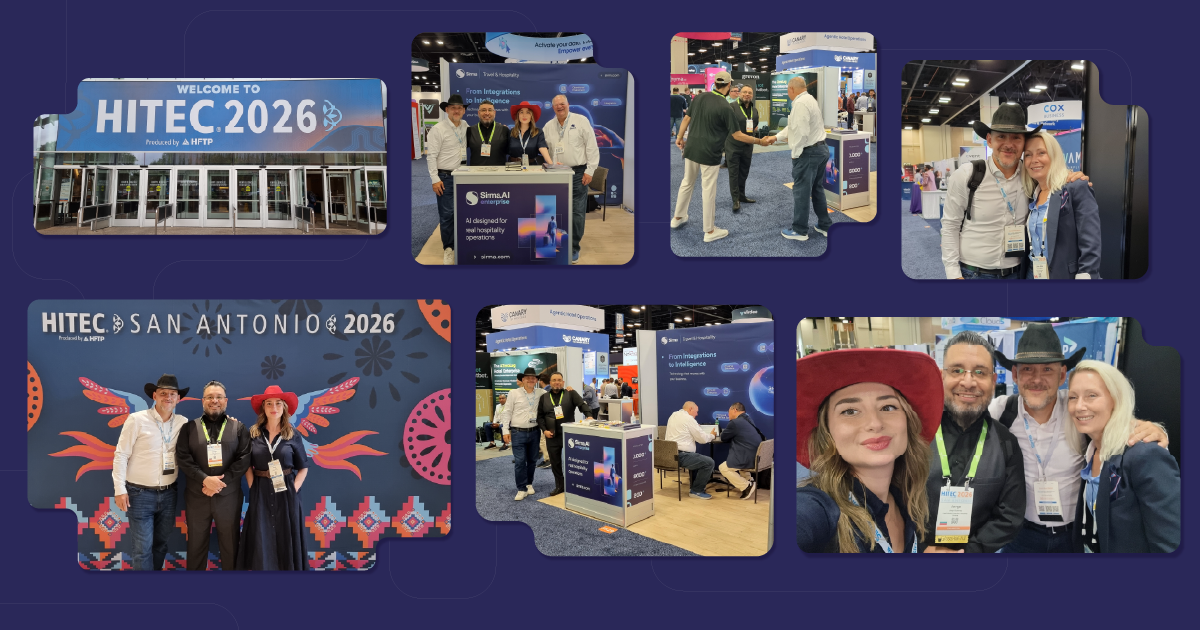
These industry trends closely reflected the conversations taking place at the Sirma booth.
The response to our hospitality offering, including Sirma.AI Enterprise, was extremely encouraging. Visitors were particularly interested in our ability to combine AI expertise with deep hospitality knowledge and deliver complete solutions entirely in-house – from consulting and software engineering to AI development, system integration and long-term support. That combination continues to differentiate us in a market where many organizations are searching for fewer vendors and more strategic technology partners.
The event also reinforced something we have long believed: flexibility matters. Every hotel group operates differently, with its own systems, processes and priorities. Organizations increasingly recognize that successful AI adoption cannot rely on one-size-fits-all solutions. Instead, they are looking for technology partners who understand their business and can adapt solutions around their operational reality.
As Darko Bosancic, Senior Vice President of Travel & Hospitality at Sirma, reflected after the event:
“HITEC confirmed that hospitality is moving beyond the AI buzz. The conversations weren’t about having AI for the sake of it – they were about making operations smarter, connecting fragmented systems and solving real business challenges. That’s where we see the greatest opportunity for the industry, and it’s exactly where Sirma is focused.”
Sharing the Conversation
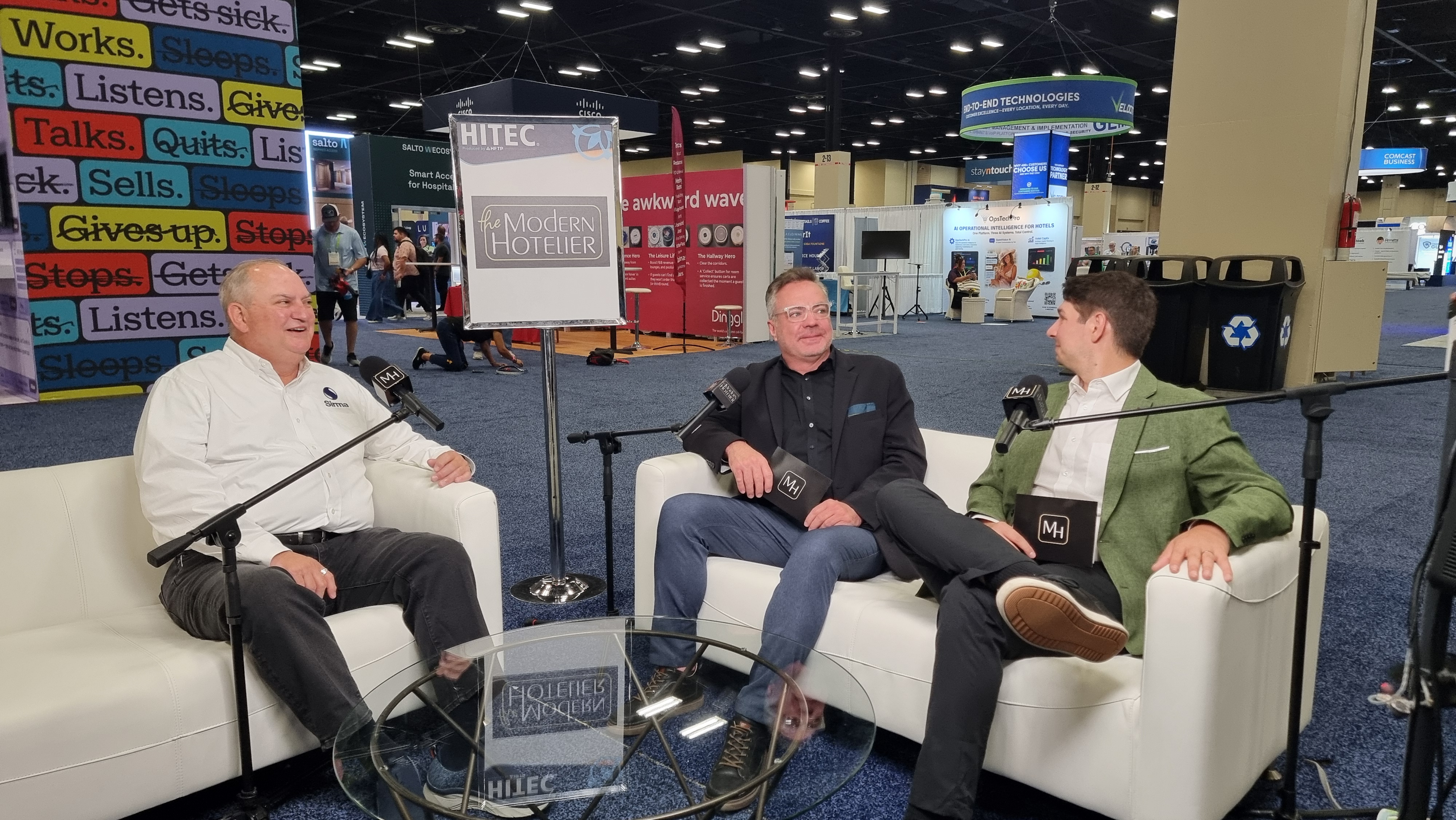
Our own program throughout the week reflected the growing interest in these topics. In addition to a full schedule of meetings, our Regional Sales Director for Travel & Hospitality, Rodd Herron, was interviewed by The Modern Hotelier, sharing his perspective on the future of AI in hospitality and the practical considerations organizations should keep in mind as adoption accelerates. Here’s a link to the full interview.
The discussions throughout the event consistently reinforced the same message: AI’s greatest value lies not in replacing people, but in enabling teams to work more efficiently, make better decisions and deliver stronger guest experiences.
Looking Ahead
Perhaps the biggest takeaway from HITEC 2026 is that the hospitality industry is entering a more mature phase of AI adoption. The excitement remains, but buyers are becoming increasingly informed and pragmatic. Organizations are asking tougher questions, expecting measurable business outcomes and looking beyond product demonstrations to understand how solutions will perform in real operational environments.
For Sirma, this was an encouraging validation of the direction we have been taking. Our conversations confirmed that organizations are looking for exactly the combination we bring to the market: hospitality expertise, AI capabilities, software engineering excellence and the flexibility to deliver integrated, end-to-end solutions that solve real business problems.
If HITEC demonstrated anything this year, it is that hospitality’s AI journey is only just beginning. The organizations that will lead the next phase won’t necessarily be those with the loudest announcements, but those capable of turning AI into practical, measurable outcomes. Judging by the conversations in San Antonio, the industry is ready for exactly that.