Artificial intelligence dominated conversations across the hospitality industry at ITB Berlin this year. From conference panels to technology demonstrations, AI was everywhere. But beyond the buzzwords and prototypes, a more important shift is taking place.
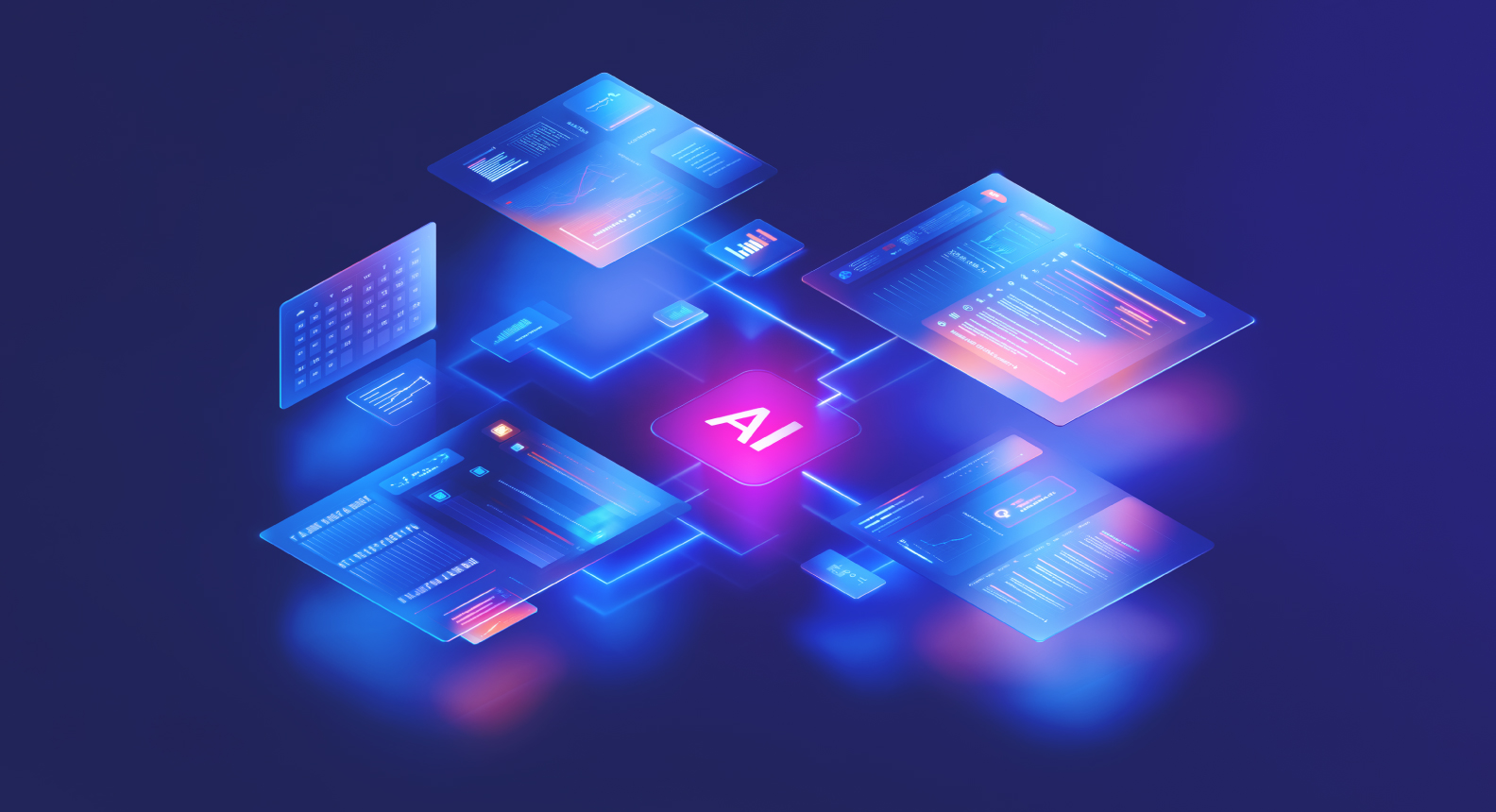
The industry is moving beyond isolated AI tools toward connected AI ecosystems, where intelligent agents support hotel operations, workflows, and guest experiences in real time.
At Sirma Travel & Hospitality, this shift is already underway.
From AI conversation to AI execution
In many hotels today, AI is still primarily associated with guest communication – chatbots, automated messaging, and digital concierge services. While valuable, these solutions represent only the first stage of AI adoption. The next phase is about operational intelligence.
Hotels run on complex, interconnected systems – PMS, CRM, housekeeping, revenue management – yet much of the coordination between them remains manual and fragmented.
The challenge is not access to data. The challenge is turning that data into real-time decisions and coordinated actions.
Why AI agents matter
This is where AI agents introduce a different approach.
AI agents act as connective layers across systems. They can understand context, interpret requests, and trigger actions across departments – reducing the need for constant manual coordination.
This shifts operations from:
- Reactive to more responsive
- Fragmented to more connected
- Manual to increasingly automated
From concept to real-world application
This transformation is no longer theoretical. At ITB Berlin 2026, Sirma presented a practical example of this approach with Vela, our first hospitality AI agent.
Vela enables guests to interact naturally via voice or chat while, behind the scenes, connecting to hotel systems and supporting real operational workflows.
The key shift is simple: AI is no longer just answering. It is executing.
Explore how this works in practice: AI Agent for Guest & Hotel Operations
Building the hospitality AI ecosystem
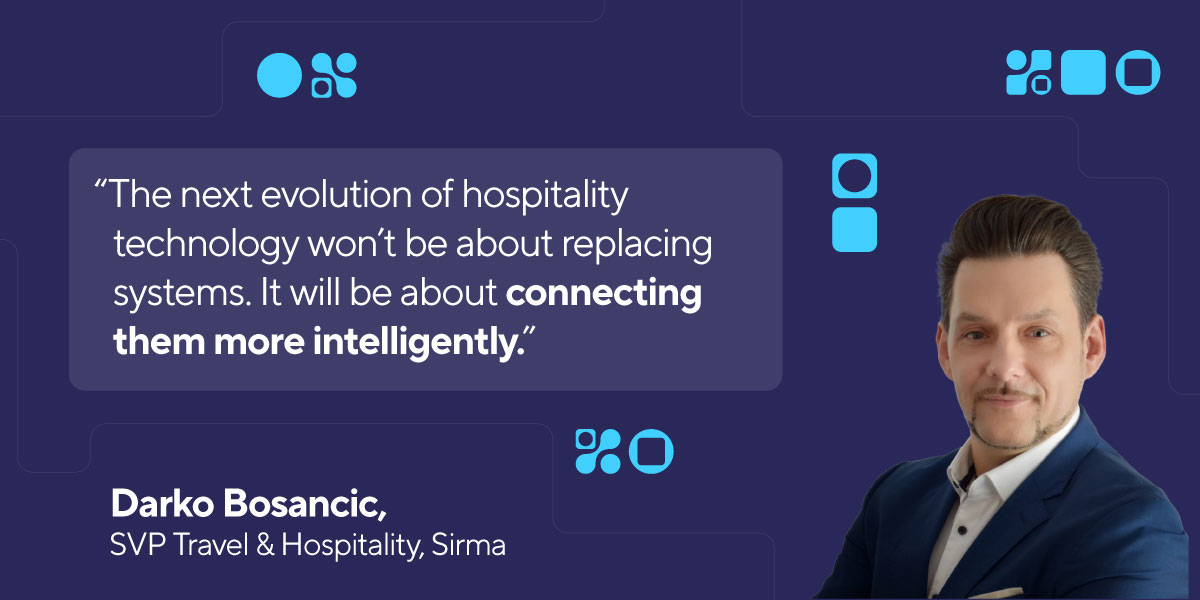
This transformation is not about adding another layer of technology. It is about making existing systems work together in a fundamentally different way.
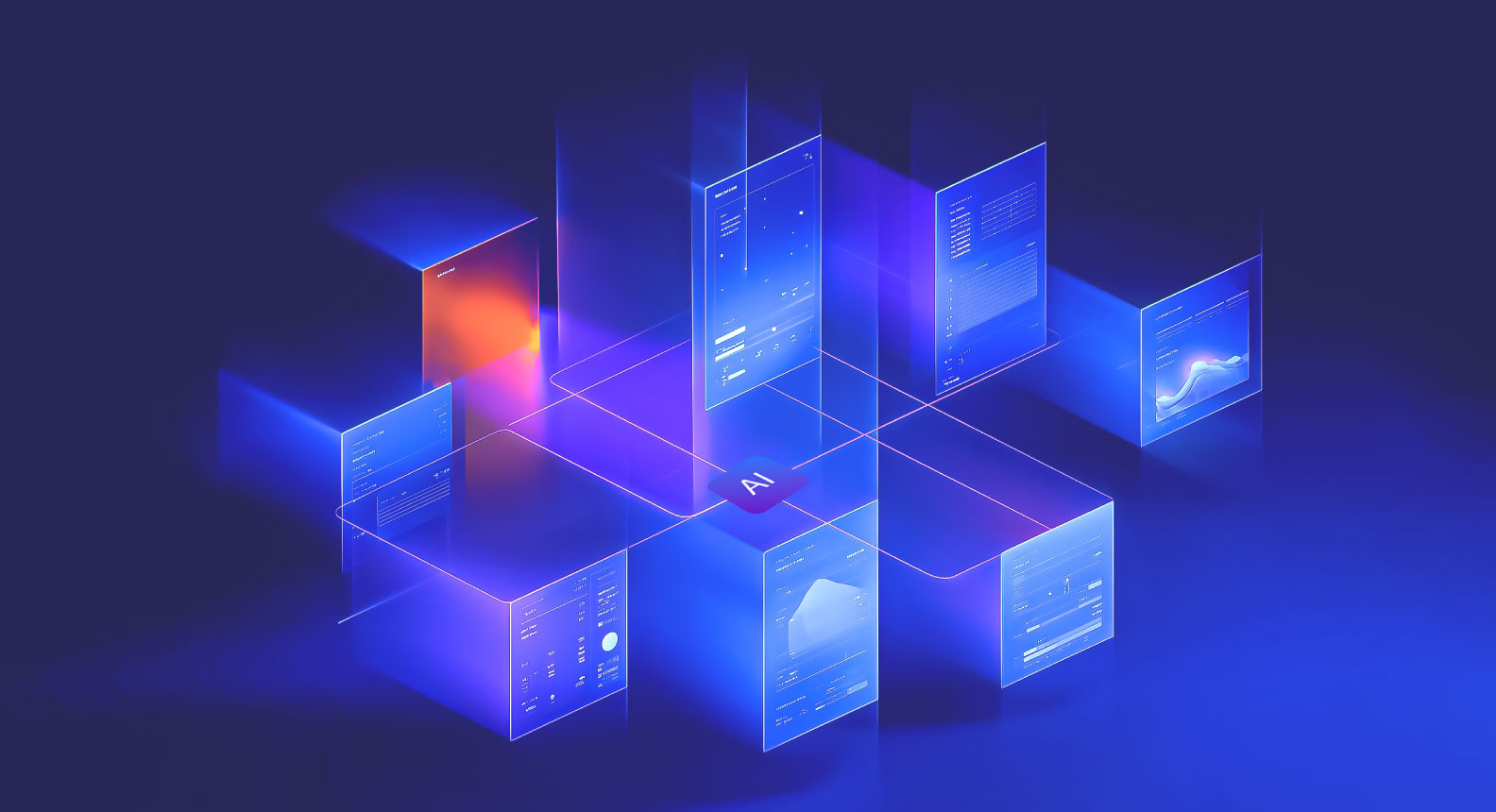
Through Sirma’s Travel & Hospitality 360 Connect framework, AI is introduced as a connective layer across PMS, CRM, and operational systems – enabling workflows to move seamlessly between departments, rather than being manually passed along.
The result is not just better integration, but a more coordinated operational model, where systems, data, and actions are aligned in real time.
Security and control
As AI agents move closer to core operations, control becomes as important as capability. These systems are not just generating responses – they are triggering actions across hotel environments.
This requires clear governance, controlled system access, and full traceability. At Sirma, this is built into the foundation – ensuring AI operates securely, predictably, and in line with enterprise standards, even within mission-critical workflows.
A new era of hospitality technology
What emerges is not a single AI solution, but an operational layer of intelligence. Hotels will increasingly rely on AI agents to support workflows, coordinate tasks, and reduce the friction between systems and teams. Not to replace people but to remove the complexity that slows them down.
So they can focus on what hospitality has always been about: Delivering exceptional guest experiences.