Sofia, Bulgaria, 8 October 2026,
DIGI PAY 2026 brought together leaders from banking, fintech and cybersecurity to discuss the trends shaping the future of financial services. During the event, representatives from Sirma and Temenos shared perspectives on two key areas of focus for the industry: AI-enabled wealth management and agentic payments.
Senior leaders from Sirma moderated sessions on wealth management and AI-driven payments, and then demonstrated an end-to-end agentic payment live on stage. The ninth edition of the conference attracted over 300 professionals from the financial services, fintech and cybersecurity sectors to the Inter Expo Center.
A milestone following Sirma’s participation in the Temenos Referral Partner Program
The conference marked the first industry event featuring both Sirma and Temenos since Sirma joined the Temenos Referral Partner Program for Bulgaria and Albania in June 2026.
The relationship between the companies extends beyond the Referral Partner Program. Sirma joined the Temenos Exchange ecosystem in 2024 with its Cloud Architecture and Roadmap (CAR) solution and has experience implementing Temenos Transact for retail and wealth banking projects.
At DIGI PAY, Temenos representatives Noah Krähenmann, Global Managing Director of Wealth Management at Temenos, Konstantinos Kanellopoulos, Senior BD Manager, SEE, and Ahu Tunc, Senior Technology & Partner Sales Europe, participated in discussions with banking leaders attending the event. They were joined by Sirma representatives Fabrice Gouttebroze, SVP International Sales and VP of the Core Banking System Temenos Practice at Sirma, Merdihan Ismailov, VP Products & Solutions, FinTech, and Nikolay Boyukliev, VP Consulting & Services, FinTech.
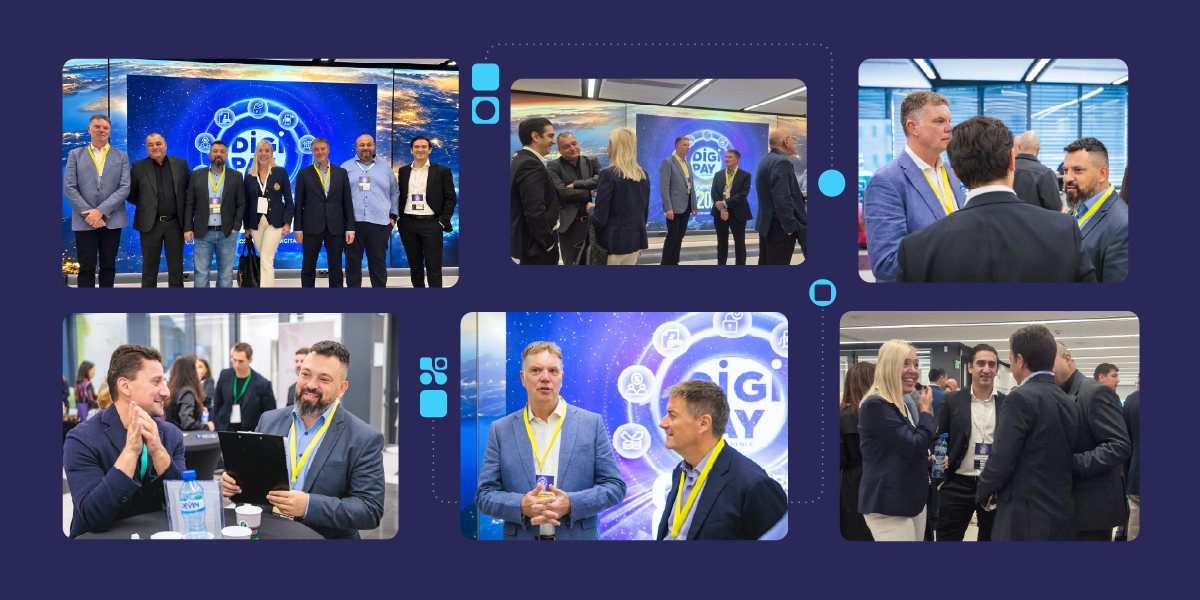
Throughout the conference, speakers discussed industry trends across wealth management, payments, cloud, data and AI technologies. The conversations highlighted opportunities for financial institutions in the region to benefit from Temenos’ banking technology and Sirma’s understanding of local market dynamics as banks continue their modernization journeys.
Wealth management: making AI part of the adviser’s workflow
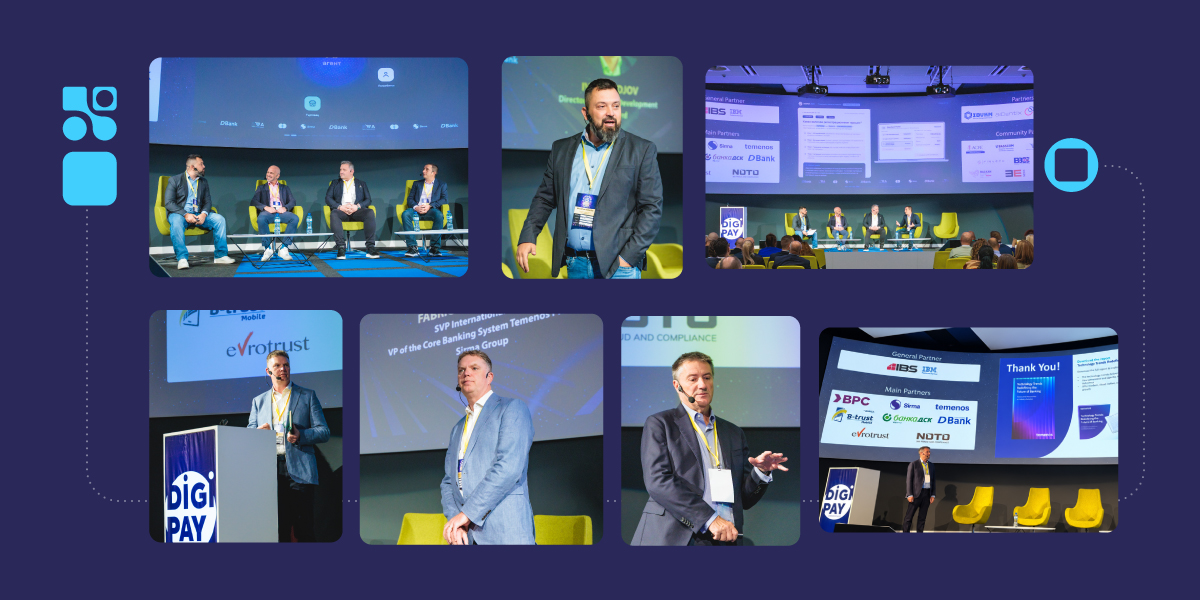
In the session The Future of Wealth Management: Navigating the Era of Artificial Intelligence, Globalization and Changing Client Expectations, Noah Krähenmann explored the forces reshaping the wealth management industry, with moderation by Fabrice Gouttebroze.
The discussion highlighted several converging trends: AI is becoming embedded in advisers’ day-to-day workflows, enabling greater efficiency and personalization; wealth creation is becoming increasingly global, with growing interest in alternative assets and emerging markets; clients are demanding greater transparency around the value of advisory services; and open banking and embedded finance are fostering more connected, data-driven customer experiences.
Particular attention was given to opportunities in Bulgaria, where the wealth and retirement market is entering a new stage of development. Private pension assets total approximately EUR 8.09 billion and cover 5.15 million insured individuals, while the planned 2027 pension reform will introduce conservative, balanced, and dynamic sub-funds. These changes are expected to expand investor choice and increase the need for transparent guidance on risk profiles, investment horizons, and fee structures. Unit-linked insurance was also identified as a complementary investment vehicle with growth potential.
The discussion further highlighted the need to address fragmentation across Bulgaria’s investment ecosystem through investor education, goal-based investing, recurring investment strategies, and more integrated customer journeys. As client expectations evolve toward personalized, real-time, and multi-channel engagement that combines digital convenience with trusted advice, financial institutions are increasingly adopting modular, API-driven platforms and embedded AI capabilities. By integrating existing systems, automating routine processes, and enhancing adviser productivity, banks can deliver scalable wealth management services, strengthen client relationships, and better serve affluent and high-net-worth segments.
Agentic payments: from discussion to live demonstration
Merdihan Ismailov moderated the headline panel on AI-driven payments. The discussion examined how prepared financial institutions are for AI agents to participate in online transactions and what needs to be resolved before wider adoption.
Merdihan then demonstrated an end-to-end agentic payment live on stage. The demonstration highlighted the importance of testing complete payment journeys and establishing clear responsibilities for authentication, security and oversight before scaling agent-driven transactions.
The potential market is substantial. A J.P. Morgan estimate cited at the conference put global agentic commerce at $2 - 5 trillion by 2030. Yet, as Astrid Cousin of the European Commission stressed, questions remain about authentication, security, and responsibility.
The wider agenda: speed, security and digital identity
Across the conference, speakers connected payment innovation with the infrastructure and trust it requires:
- Instant payments are growing. Astrid Cousin of the European Commission (DG FISMA) reported 2,820 payment service providers participating in SEPA Instant, with instant payments rising from 13% of credit transfers in 2022 to 38% in Q2 2026. She described instant payments and the digital euro as complementary initiatives.
- Bulgaria is accelerating. Conference figures indicated around 38 million instant transfers in 2025, a 69% increase year on year.
- Fraud prevention must operate in real time. Speakers contrasted 10-second regulatory and five-second payment-scheme timelines with the millisecond decisions required for effective risk assessment. They called for closer integration of fraud detection and anti-money laundering (FRAML). Inge den Hollander of ACFE Netherlands demonstrated how deep fakes and AI can accelerate identity theft.
- Digital identity is approaching. Kiril Gaberov of the Ministry of Innovation and Digital Transformation said Bulgaria’s state-owned national digital identity wallet is expected by October 2027. Representatives of Eurotrust, BORICA and DSK Bank emphasized the need for public-private cooperation.
The common thread was clear: faster payments, AI-powered services and digital identity will depend on equally strong safeguards and customer trust.
In conclusion, DIGI PAY 2026 showed how quickly the discussion moved from possibilities to practical deployment. Sirma’s leadership sent a clear message that regional banks should simplify their transformation efforts. Rather than running multiple initiatives with separate budgets, governance structures, and timelines, banks were encouraged to combine related priorities under a single program with a shared vision and clear objectives. This approach can reduce complexity, improve alignment, and accelerate delivery. Sirma and Temenos will continue to work with banks in Bulgaria, Albania and the wider region to transform AI, wealth management and payment innovations into secure, measurable programs.
You can watch recorded presentations on the event website